
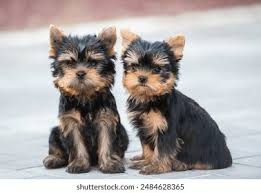
The Spotted Enigma: Everything You Need to Know About the Merle Yorkie
Merle Yorkie. You’re likely familiar with the classic Yorkshire Terrier: small, feisty, and sporting that iconic silky blue and tan coat. But recently, a much more visually striking variation has entered the spotlight: the Merle Yorkie.
With coats dappled in mesmerizing patterns of slate gray, cream, red, and blue, it’s easy to see why these dogs command attention and high prices. However, when you step into the world of merle genetics, you quickly discover that beauty often comes with complex ethical and health considerations.
If you are considering adding one of these visually stunning dogs to your family, or if you simply stumbled across a picture and needed to know more, you’ve come to the right place. We’re going to dive deep into the genetics, the controversy, and the necessary health precautions surrounding the captivating, yet complicated, Merle Yorkie.
What Exactly is a Merle Yorkie? (And Why Are They So Rare?)
A Merle Yorkie is a Yorkshire Terrier (or a Yorkie mix marketed as such) that possesses the merle gene, which creates a pattern of irregular, darker swatches over a lighter background. This gene affects the dilution of pigment, leading to their unique “spotted” appearance.
The colors can vary dramatically, leading to terms like “Blue Merle Yorkie” or “Chocolate Merle Yorkie.” Beyond their coat, merle dogs often exhibit striking blue or heterochromatic eyes (one blue, one brown, or marbled), further enhancing their distinctive look.
The Genetic Truth: Why Your Yorkie Shouldn’t Be Merle
Here is the essential point that often confuses prospective owners: The merle gene (M locus) is not naturally present in the purebred Yorkshire Terrier gene pool.
The standard AKC-recognized Yorkie coat only comes in four colors: blue and tan, blue and gold, black and tan, or black and gold.
For a Yorkie to display the merle pattern, the gene must have been introduced through cross-breeding with another breed that naturally carries the gene, such as the Dachshund, Australian Shepherd, or Chihuahua. Therefore, while often marketed as “purebred Merle Yorkies,” these dogs are technically F1 or F2 hybrids, or they are the product of introducing the gene many generations ago (but still not fitting the standard).
This genetic reality is the root of the controversy surrounding their use in breeding.
Decoding the Genetics: The Power of the M Locus
The genetics involved in creating a merle coat are fascinating but also responsible for the health risks associated with the pattern. The merle gene is a dominant modifier located on the M locus.
Here is a simplified breakdown of the three main ways this gene can express itself:
| Genotype | Description of the Dog | Health Implications |
|---|---|---|
| mm | Non-Merle (Regular Yorkie) | Standard coat color (blue/tan). No merle-related health risks. |
| Mm | Single Merle | The visual Merle Yorkie. One copy of the gene creates the desired pattern. This dog has a moderate risk of merle-related issues (mostly deafness or minor eye faults). |
| MM | Double Merle | Known as a “Lethal White” or “Homozygous Merle.” This dog is overwhelmingly white, with only small patches of color. |
The Danger of the Double Merle (MM)
Understanding the Double Merle is the most important piece of information for any potential owner or breeder.
When a breeder tries to achieve the maximum merle effect by crossing two merle-patterned dogs (Mm x Mm), they risk producing puppies with the MM genotype. These puppies carry two copies of the merle gene, which results in a massive reduction of pigment everywhere on the body, including the eyes and the cochlea (inner ear).
This lack of pigment is directly linked to severe, often challenging, disabilities.
The Serious Health Risks Associated with the Merle Gene
While a single merle (Mm) can often be perfectly healthy, the potential for serious sensory defects is elevated compared to a standard mm Yorkie. For the dangerous Double Merle (MM), the risks are substantial and predictable.
If you choose a Merle Yorkie, you must be prepared for the possibility of these health issues:
1. Ocular Defects (Eye Problems)
The merle gene affects the color (pigmentation) of the eyes. A lack of pigment can interfere with the development of the structures inside the eye.
Common Merle-Related Eye Issues:
- Microphthalmia: Abnormally small eyeballs.
- Colobomas: Holes or gaps in the structure of the eye (iris, retina, or optic disc).
- Irregular pupils: Pupils that do not react normally to light.
- Vision impairment or blindness: Especially common in Double Merles.
2. Auditory Defects (Hearing Problems)
The most common and impactful health risk is deafness. The same lack of pigment that affects the coat and eyes also affects the melanin-producing cells in the inner ear, which are crucial for hearing.
- Unilateral Deafness: Deafness in one ear.
- Bilateral Deafness: Complete deafness in both ears (highly prevalent in Double Merles).
3. Skin Sensitivity and Immunity
While less common than sensory issues, merle dogs, particularly those with large patches of white, can be more susceptible to sun damage and certain types of skin cancers.
Crucial Takeaway: A responsible breeder will never breed an Mm dog to another Mm dog. They will only breed a Single Merle (Mm) to a Non-Merle (mm) dog to minimize the risk of producing deaf or blind puppies.
The Controversy: Registration and Ethical Breeding
The Merle Yorkie sits squarely in the middle of a major debate among dog enthusiasts and kennel clubs.
AKC and Breed Standards
Major registering bodies, like the American Kennel Club (AKC), do not recognize the merle pattern as acceptable in purebred Yorkshire Terriers. This is because the gene is non-native to the breed.
If a dog is registered as a purebred Yorkie but exhibits the merle coloring, it usually means the registration papers are inaccurate, or the dog is the result of undocumented (and unethical) cross-breeding several generations back.
The Role of “Designer” Breeders
Because Merle Yorkies are exotic, they often fetch extremely high prices. This financial incentive drives some unscrupulous breeders to focus solely on the visual pattern without regard for health testing or genetic consequences (like producing Double Merles).
If you are considering purchasing a Merle Yorkie, you must ask the breeder two non-negotiable questions:
- What breeds were introduced to achieve the merle coloring? (A reputable breeder should be transparent about the history.)
- Can I see the genetic testing documentation (OFA/CHIC)? (The parents should be tested for common Yorkie issues and the merle gene.)
Merle Yorkie vs. Standard Yorkie: A Comparison
To help you decide if the Merle Yorkie is the right choice for you, here is a quick visual comparison:
| Feature | Standard Yorkshire Terrier | Merle Yorkshire Terrier |
|---|---|---|
| Coat Pattern | Solid blue/black and tan/gold. | Mottled, dappled, or patched (blue, gray, red, tan). |
| Eye Color | Dark brown or black. | Often blue or heterochromatic (marbled/mismatched). |
| AKC Recognition | Yes, fully recognized. | No, considered a disqualifying fault. |
| Genetic Risk | Low risk for sensory issues. | Elevated risk (Mm) to severe risk (MM) for deafness and blindness. |
| Origin | Terriers bred in Yorkshire, England. | Cross-bred to introduce the “M” gene, often with other small breeds. |
Frequently Asked Questions (FAQ)
Q1: Is a Merle Yorkie a purebred dog?
A: No. Because the merle gene is not naturally carried by the Yorkshire Terrier, any dog displaying the merle pattern must have had the gene introduced via cross-breeding at some point. Therefore, they are not considered purebred by major kennel club standards.
Q2: Are Merle Yorkies difficult to train?
A: Merle Yorkies are generally intelligent and can be trained just like standard Yorkies. However, if your dog is deaf or blind (especially common in double merles), training methods must be adapted. Deaf dogs require hand signals, and blind dogs rely heavily on verbal cues and scent.
Q3: How much does a Merle Yorkie typically cost?
A: Due to their rarity and high demand, Merle Yorkies are often priced much higher than standard color Yorkies. Prices typically range from $3,000 to $6,000, and sometimes even higher. This high price point often encourages unethical breeding, so proceed with extreme caution.
Q4: Does the merle gene only cause health problems in double merles?
A: While the health issues are most severe and most frequent in double merles (MM), single merles (Mm) also carry a higher risk profile than non-merles. Defects like minor eye colobomas or unilateral deafness can occur in single merles.
Conclusion: Caution is Your Best Companion
The Merle Yorkie is undeniably a striking and beautiful dog. If you are captivated by these unique pets, the best way to move forward is with knowledge and caution.
If you choose to purchase a Merle Yorkie, ensure you support a breeder who uses strict genetic testing standards and adheres to ethical practices—meaning they never breed two Merle dogs together.
By prioritizing health over trendy color, you ensure that your beautiful spotted companion lives a long, happy, and healthy life by your side.